Relying on a bus for everyday life can feel confusing at first, especially if you’re new to Athens or planning to live car‑lite in West Athens. You want reliable rides to work, groceries, and downtown without guessing whether the bus will show. This guide breaks down Route 21 and the Athens system in plain English, so you can read a schedule, use real‑time tools, and pair your home search with great transit access. Let’s dive in.
Why transit matters in West Athens
If you live in West Athens, public transit can unlock simple daily trips without a second car. Route 21 is a key west‑side line that typically connects neighborhoods to downtown, major transfer points, shopping corridors, and University of Georgia connections. That means you can reach work, errands, and events with less driving and less parking stress.
You’ll find multiple numbered routes across Athens‑Clarke County, and the county agency operates the local fixed‑route buses. The University of Georgia runs separate campus shuttles. If your day involves UGA, check how county routes and campus shuttles connect before you commit to a specific schedule.
Meet Route 21 in plain English
Route 21 serves West Athens and generally links residential areas with downtown and other high‑demand spots. Exact stops, times, and patterns can change, so the best way to understand the route is to check the official route page and then use a real‑time app when you ride.
What you’ll see on a Route 21 page
- A route map that shows the path, endpoints, major intersections, and landmarks like the downtown transit center or shopping areas.
- A timetable with listed times at selected timepoints. Not every stop appears on the table.
- Service notes, such as differences on weekdays, weekends, holidays, or school days.
- Frequency details, either shown as repeated listed times or a note about headways.
- Rider info like accessibility, bike rack policy, transfer rules, and fare options.
- Contact details and service alerts.
How to read the timetable with confidence
- Timepoints vs every stop: Timetables show a few anchor locations. Intermediate stops fall between those timepoints, so your actual stop may be a few minutes earlier or later than the listed timepoint.
- Direction labels: Look for “inbound” or “toward downtown” versus “outbound” or “toward” the route’s other endpoint. Confirm the direction that matches where you’re going.
- Headways: If departure times are 8:05 and 8:35, that’s a 30‑minute headway. If times are uneven, service is irregular and you should use real‑time tools.
- First and last trips: The earliest listed time is usually the first bus at that timepoint, and the latest is the last. There may be different first/last times at other timepoints or on different days.
- Weekday vs weekend: Many routes run fewer hours or fewer trips on weekends, and some holidays have unique service. Read notes at the top or bottom of the schedule.
- School day variants: If indicated, certain trips may only run on school days or add extra runs during peak dismissal times.
Check if Route 21 works for your specific trip
- Find your origin and destination stops on the map and note which direction you’ll travel.
- Decide if you need a transfer. If yes, identify where that transfer happens and how frequently the second route runs.
- Calculate door‑to‑door time: walking to the stop + average wait + in‑vehicle time + transfer time + walk to your destination.
- Use standard planning assumptions when you’re still evaluating a home or job:
- A 0.25‑mile walk is roughly 5 to 7 minutes and is a common threshold for a convenient bus stop.
- Average wait time is about half the headway. If the bus comes every 15 minutes, plan on a 7 to 8 minute average wait. If it’s every 30 minutes, plan on 15 minutes.
Service hours and patterns you should know
Service span vs frequency
- Service span is the first and last trip of the day. Each route can have different spans on weekdays versus weekends.
- Frequency is how often the bus comes during that span, such as every 15, 30, or 60 minutes. Frequency matters as much as span, because shorter waits make trips feel effortless.
Common patterns in Athens
- Peak vs off‑peak: Expect more trips in the morning and afternoon commuting hours, with lighter service midday and later in the evening.
- Weekend service: Often has fewer trips and shorter spans. Some routes may not run on Sundays.
- Late‑night gaps: If you work late or enjoy downtown after dark, verify the last bus time and evening frequency.
- School day or event adjustments: Some routes change patterns around school dismissal or major events. If you live near UGA or travel through campus, keep an eye on event notices.
How to talk about hours without memorizing times
- Use the official route schedule to confirm the first and last trips for Route 21 on your specific day.
- Compare weekday and weekend timetables before you commit to a routine.
- For late‑evening rides, always check a real‑time tool in case of detours, delays, or service changes.
Planning tools and real‑time resources
You have two types of tools: official agency resources and third‑party trip planners that use the agency’s data.
Official agency resources
- The Athens‑Clarke County Transit website has the definitive Route 21 map, timetable PDFs, fare info, and service alerts.
- Customer service can help with questions about changes, paratransit eligibility, and accessibility.
- If the agency publishes GTFS data, many apps will reflect live updates and schedule changes.
Apps that make this easy
- Google Maps offers step‑by‑step transit directions and often shows real‑time vehicle positions when supported.
- Transit app provides live departure times, nearby routes, and service alerts.
- Moovit is another option for route guidance and notifications.
- If the agency hosts its own real‑time arrival page, use it alongside an app for confirmation.
How to use these tools in practice
- To test a commute: Enter your home and destination in a trip planner to see exact Route 21 options, estimated travel time, and transfers.
- To check your current wait: Open a real‑time app to see minutes until the next bus.
- For disruptions: Subscribe to alerts so you get notified about detours, weather impacts, or holiday changes.
Pair your home search with transit
Buying or renting with transit in mind is smart, especially if you want to keep life car‑lite. Use this checklist to evaluate each property.
Quick evaluation checklist
- Walking distance: Aim for a stop within 0.25 mile for daily convenience. Up to 0.5 mile may work for occasional trips.
- Number of routes: More routes within walking distance means more options and backup if one route is delayed.
- Frequency at your times: Check AM/PM commute windows and weekend or evening needs. Look for 15 to 30 minute peak headways for reliability.
- Transfers: Count how many and where. Fewer transfers usually means a smoother commute.
- Total door‑to‑door time: Compare transit to driving, including walking and the average wait.
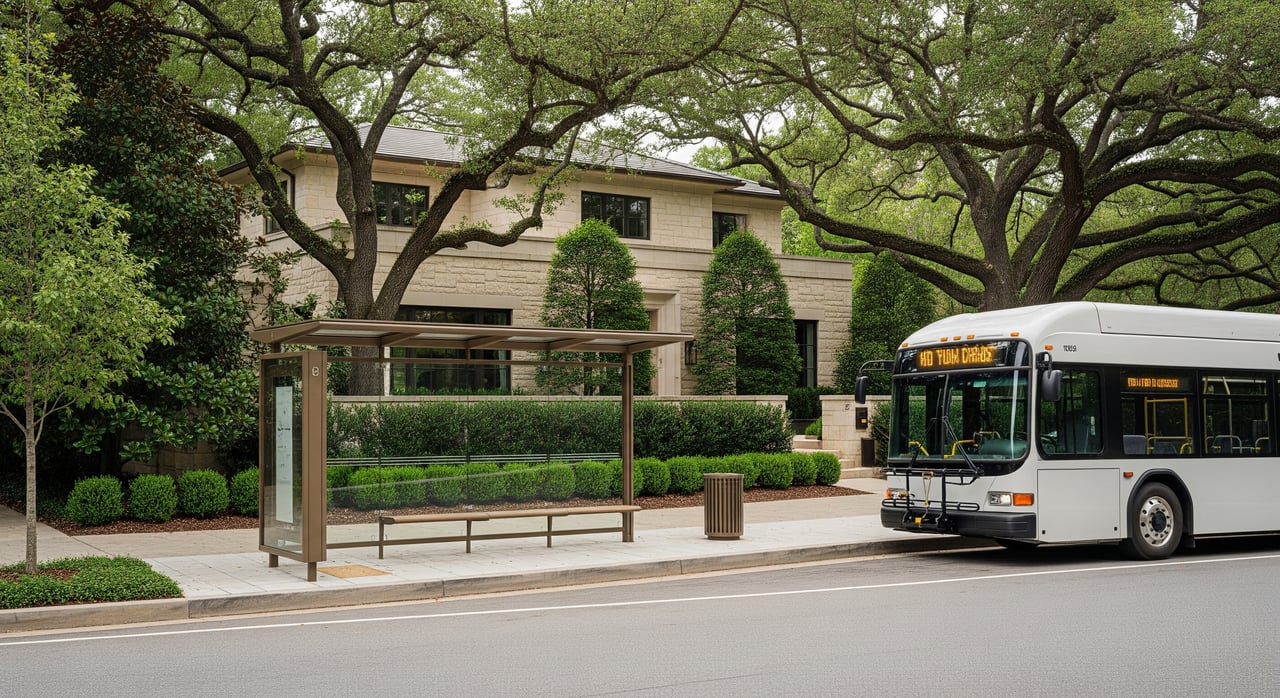
- Stop amenities and comfort: Shelters, lighting, and curb ramps matter for rainy days and evening trips.
- Night and weekend coverage: Verify last trips and Sunday schedules if relevant to your lifestyle.
Home search tactics
- Use overlays and maps to visualize stops, routes, and a 0.25‑mile radius around each candidate property.
- Ask the listing agent about the shortest and safest walking path to the stop, plus sidewalk and crossing conditions.
- Test your commute in person at the time you’d actually travel. A quick practice ride reveals more than a timetable.
Last‑mile options
- Bike or scooter: Many buses allow bikes on racks. A short ride can extend your practical reach beyond the 0.25‑mile walk.
- Rideshare or taxi: Helpful for late‑night trips or as an occasional backup. Budget for a few per month if it replaces a second car.
- Park and ride or on‑demand: Check if there are park‑and‑ride lots or microtransit options where you live.
Safety, accessibility, and inclusivity
- Accessibility: County bus fleets typically note accessibility features on the agency site. Paratransit options and eligibility details are available through the agency.
- Nighttime awareness: If you travel after dark, look for well‑lit stops and familiar pathways.
Sample planning walkthrough
Here’s a simple way to test if Route 21 fits your routine:
- Find your nearest stop on the Route 21 map. Confirm which direction matches your destination.
- Look up the timetable for your travel day and note the trips around your target departure.
- Estimate your walk time using the 0.25‑mile rule of thumb. If the bus runs every 30 minutes, plan on a 15‑minute average wait unless you can time it precisely.
- If a transfer is required, check the second route’s frequency and add that expected wait time.
- Compare the transit door‑to‑door time to your usual drive. If the difference is small, transit may save you on parking costs and stress.
- On your first actual ride, open a real‑time app to adjust on the fly. If the first bus is delayed, the app can suggest the next departure.
Ready to house‑hunt smarter with transit?
If you want a home that supports a car‑lite lifestyle, we’ll help you weigh Route 21 access, travel time, and neighborhood feel without guesswork. Our team knows which West Athens spots put you close to useful routes and daily needs. If you’re relocating or buying your first place, we’ll map options around your commute and weekend plans.
Let’s find a place that fits your routine and your budget. Start with a quick consult and a custom home list tailored to your transit needs with the Jarrett Martin Group.
FAQs
How do I read the Route 21 schedule if my stop isn’t listed?
- Timetables show timepoints, not every stop. Use the nearest timepoint as a guide, arrive a few minutes early, and use a real‑time app for precise arrival.
What are the first and last Route 21 trips each day?
- Check the official Route 21 timetable for your specific day. Confirm weekday versus weekend times and any holiday notes before you ride.
How often does Route 21 run during rush hour in West Athens?
- Review the timetable to estimate headways. If trips are listed every 15 minutes, average wait is about 7 to 8 minutes. If every 30 minutes, plan on about 15 minutes.
How do I plan a door‑to‑door commute with Route 21?
- Use a trip planner to enter your home and destination. Add walking time to the stop, average wait, in‑vehicle time, and any transfers.
Can I bring a bike on the bus in Athens?
- Many local systems note bike rack policies on route or rider info pages. Check the agency site for current bike rules before you ride.
What if I need late‑night or weekend service on Route 21?
- Verify weekend schedules and last‑trip times for your stop. Use real‑time tools in the evening and consider rideshare as an occasional backup.
How do county buses connect with UGA shuttles?
- The county system and UGA operate separately, but you can transfer between them at certain points. If your trip involves campus, check both the county timetable and UGA shuttle info.
Do I need exact change or a pass to ride?
- Review the agency fare page for current options, including passes or fare‑free notices. Confirm before relying on a specific fare method.