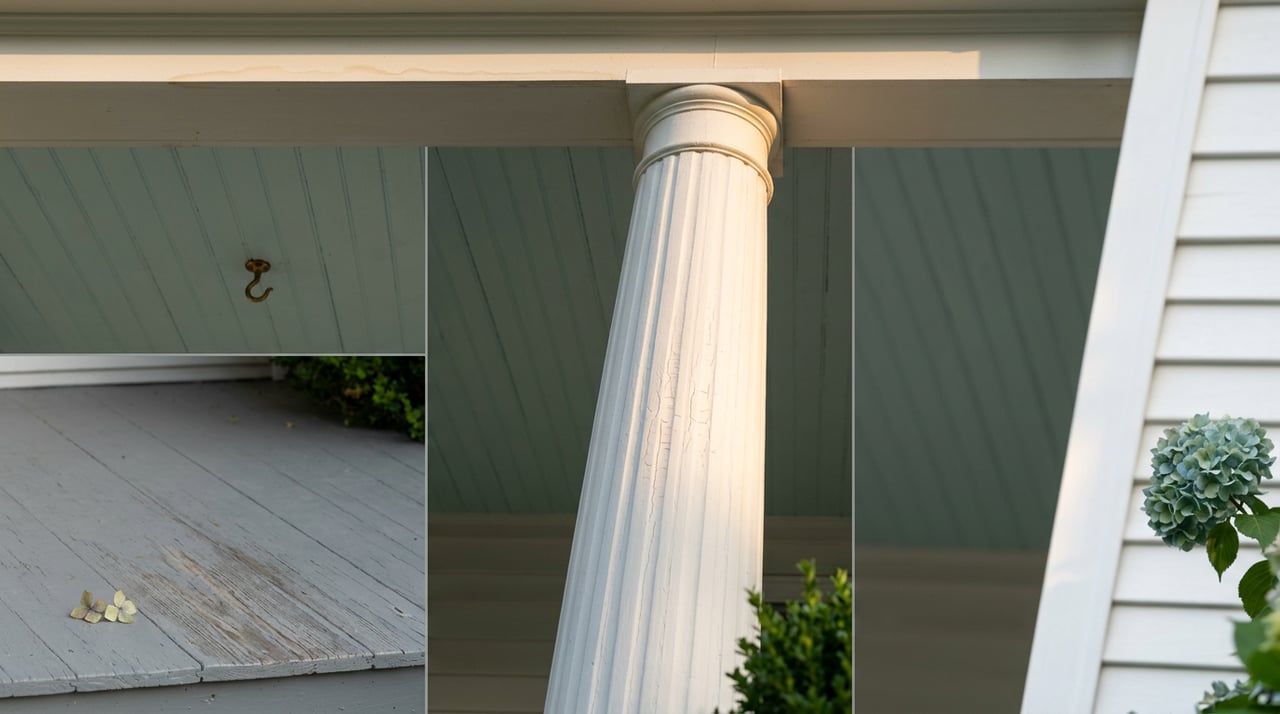
Normaltown Home Prices and Historic-District Status
September 24, 2026
September 24, 2026
What is a buyer actually paying for when they choose a Craftsman bungalow on a Normaltown side street over an almost identical one two blocks away in Cobbham?
Ask most agents and the answer stops at curb appeal: porches, hardwood floors, walking distance to Prince Avenue's coffee shops and Agua Linda's patio, a Saturday morning at the farmers market in Bishop Park. All of that is real, and it's a big part of why people want to live here. But Normaltown's character is not protected the same way Cobbham's or Boulevard's is. Athens-Clarke County has never designated Normaltown a local historic district, and that distinction is worth understanding before you write an offer.
Over the three months ending May 2026, Normaltown's median sale price reached $595,000, up 27 percent from the same window a year earlier. Price per square foot was running near $331 as of June 2026, up about 6 percent year over year. For comparison, homes across Athens as a whole sold for a median of $355,000 over that same three-month window ending May 2026. Normaltown isn't just outpacing the city. It's approaching the price tier of neighborhoods with actual legal protection: Cobbham listings were asking near $535,000 in recent months, and Boulevard near $849,000.
Two things are true at once here. First, Normaltown had only five recorded sales in May 2026, down from eight the year before, so a single high-end renovation flip can swing the median hard in a market this thin. Second, even accounting for that volatility, the direction is clear and it has been clear for a while: buyers are treating Normaltown as a peer of Athens's protected historic districts, not as the more loosely governed neighborhood it legally is.
"Historic" gets used loosely around Normaltown, and for good reason. According to the Red and Black, part of the area, the stretch tied to Oglethorpe Avenue, is listed on the National Register of Historic Places; national listing is an honor, not a rulebook. It doesn't touch zoning, and it doesn't require anyone to get permission before altering or demolishing a structure.
Local historic district designation is the version that actually does something. In a locally designated district, Athens-Clarke County requires a Certificate of Appropriateness before exterior changes to a property can begin.
Normaltown has none of that. Historic Athens, the local preservation nonprofit, put it plainly on its own advocacy page, noting the area "lacks the most critical form of protection: local historic district designation." A 2022 town hall hosted by Commissioner Tim Denson at Normal Bar explored whether that should change. Panelists including Historic Preservation Commission chair Heather Fletcher and Historic Athens executive director Tommy Valentine walked residents through what designation would and wouldn't mean. Nothing came of it. As of the county's own 2022-2027 Historic Preservation Commission strategic plan, Normaltown still sits on the list of areas the commission would like to designate someday, alongside Newtown and Whitehall. Someday hasn't arrived.
| Neighborhood | Local historic district status | Certificate of Appropriateness required | Recent price signal |
|---|---|---|---|
| Cobbham | Designated in 1988, according to the Historic Cobbham Foundation | Yes | Listings near $535,000 |
| Boulevard | Locally designated | Yes | Listings near $849,000 |
| Milledge Avenue | Locally designated | Yes | Listings near $1,282,250 |
| Normaltown | Not designated (partial National Register coverage only) | No | Sales median $595,000 |
Athens-Clarke County counted 15 local historic districts as of September 2020. A sixteenth, West Downtown, was added in 2021 after preservation advocates pushed back on a threatened demolition and won. That's the version of this story with a happy ending. Normaltown's version is still open.
This isn't an abstract policy debate. In 2025, Historic Athens added the Coke-Talmadge House at 1275 Prince Avenue to its Places in Peril list, flagging fears that the property could be demolished to make room for an expansion of Piedmont Athens Regional's medical campus, the same institution that anchors the neighborhood. As of Flagpole's February 2026 reporting, no resolution had been reached.
If the Coke-Talmadge House sat inside a locally designated district, exterior changes would require a Certificate of Appropriateness before work could begin. Because it doesn't, the property's fate is being worked out through hospital planning and community pressure rather than through a preservation ordinance built for exactly this situation.
The absence of a local district doesn't just affect old houses at risk of demolition. It shapes what can get built next to the ones that stay.
In August 2026, county planning staff issued a report recommending approval of a rezone at 490 Clover Street, inside Normaltown, from RS-8 to RM-2. The change would let the applicant keep the existing structures on the lot while capping bedroom density at seven, and staff noted the parcel sits near the Normaltown Business District with multiple nearby legal-nonconforming multifamily uses already scattered through the area. Staff also found the request compatible with the county's 2045 Future Land Use Map, which designates the corridor for "incremental growth and gentle density increases."
None of that is a scandal. It's ordinary planning work, and Athens genuinely needs more housing near its walkable corridors. But it's a useful data point for anyone comparing Normaltown to Cobbham on paper. The Clover Street case gives buyers a concrete example of the density changes moving through the pipeline.
None of this means buying in Normaltown is a mistake. It means the calculation is different than it looks from the listing photos, and it cuts two ways.
For buyers comparing the neighborhoods, the practical question is how they weigh renovation flexibility against the review that local designation provides; the Coke-Talmadge House illustrates what can be at stake when that review is absent.
Does the National Register listing protect any part of Normaltown? Only in the sense of eligibility for certain tax incentives and grant programs. It has no authority over what an owner can build, alter, or demolish. Zoning and any Certificate of Appropriateness requirement come from local designation, which Normaltown does not have.
Could Normaltown still become a local historic district? It's listed as a candidate in the county's 2022-2027 Historic Preservation Commission strategic plan, and residents have raised it publicly before, most recently at the 2022 town hall. No application has moved forward as of this writing.
Does this affect financing or insurance? Not directly. Lenders and insurers look at the condition and age of the structure itself, not its historic district status. The designation question is about what happens to the building and its neighbors after closing, not about qualifying for the loan.
Character is real in Normaltown, and so is the demand behind these prices. What's worth sitting with before you make an offer is that the local historic-district protection that exists two blocks over in Cobbham doesn't apply here. If you're weighing a purchase in Normaltown against one of Athens's designated districts, or you're trying to figure out what a specific parcel's zoning actually allows, that's exactly the kind of block-by-block knowledge the Jarrett Martin Group works through with clients every week. Start Your Home Search with a team that reads the zoning report before it reads the listing description.
This article is general information, not legal, tax or financial advice. Consult a qualified professional about your situation.
Stay up to date on the latest real estate trends.
First-time buyer or seasoned investor, we guide you through every step of the process. Our comprehensive search capabilities ensure we find the property that aligns perfectly with your needs and lifestyle. Whether it's a new construction opportunity or an undiscovered gem, your ideal property awaits. Schedule a consultation to discuss your real estate goals.